Paper Coffee Filters for Keurig Brewers
Learn how paper coffee filters fit Keurig K-Cup brewers, which reusable pods accept them, how to load them, and how paper compares with mesh filters.
Contents
- How paper filters work in a Keurig brewer
- Checking paper filter fit and basket compatibility
- Loading a paper filter into a reusable pod
- Grind size and dose for paper-lined pods
- Paper liners compared with mesh-only pods
- Keurig brewers with a carafe side
- Cleaning the pod and holder safely
- Questions about paper filters for Keurig
- Can you put a regular paper coffee filter in a Keurig?
- Do I need a reusable pod to use paper filters in a Keurig?
- Do paper filters change the taste of Keurig coffee?
- Why does my reusable pod overflow with a paper filter?
- Can you reuse a paper Keurig filter?
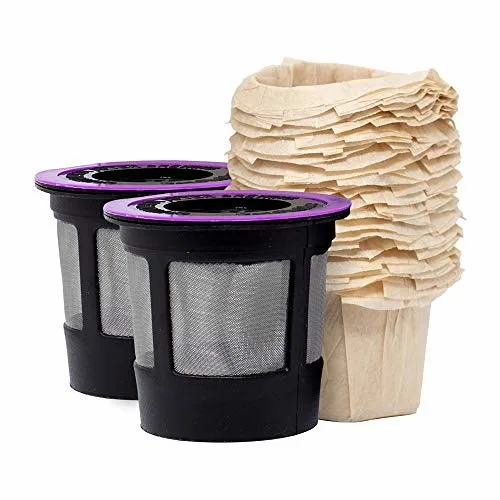
Paper coffee filters for Keurig brewers are small disposable liners that sit inside a reusable K-Cup style pod. The paper holds your ground coffee, catches fine particles, then lifts out of the pod for cleanup. A K-Cup brewer has no basket for flat paper filters, so the liner must match your reusable pod.
- Paper liners for Keurig go inside a reusable pod, not directly into the brewer.
- Match the liner shape and size to your reusable pod before buying a pack.
- Use a medium grind and leave headspace so water can flow without overflowing.
- Paper gives a cleaner cup with less sediment than a mesh filter alone.
- Keep fingers away from the brewer needles when loading or cleaning.
How paper filters work in a Keurig brewer
Paper filters work in a Keurig brewer only when paired with a reusable pod. A Keurig K-Cup brewer is built around a sealed pod with its own internal filter. The machine pierces the pod lid with an entry needle and the pod base with an exit needle. Hot water then passes through the coffee and out through the bottom.
A reusable pod replaces the sealed K-Cup with a refillable cup that has a mesh screen. You fill the pod with your own ground coffee and close the lid before brewing. Paper liners sit inside that cup, between the coffee and the mesh. The liner becomes the main filter, while the mesh mainly supports it.
A paper liner changes the taste of pod coffee more than the brewing process. The fibers trap fine coffee particles and some of the oils that pass through metal mesh. The result is a lighter body with less grit at the bottom of the mug. Some drinkers prefer that clarity, while others miss the heavier texture of mesh-filtered coffee.
Checking paper filter fit and basket compatibility
Paper filter fit depends on the shape and depth of your reusable pod. Pods differ in diameter, height and lid design from one maker to another. A liner that is too tall bunches under the lid and can stop the lid from sealing. A liner that is too short lets grounds spill over its rim into the mesh.
Filter basket compatibility starts with the packaging of the liner pack. Liner packs list the pod styles or brewer types they are cut for. Some liners are plain cups, while others come with an attached paper lid that folds over the coffee. Lidded liners suit pods where grounds might float up toward the entry needle.
A quick dry test shows whether a paper liner fits your reusable pod. Press an empty liner into the pod and close the lid without coffee. The lid should shut fully, with no paper caught in the hinge or the seal. Check that no paper sits over any opening meant for the brewer's needle.
Loading a paper filter into a reusable pod
Loading a paper filter into a reusable pod takes a few careful steps. Start with a clean, dry pod, since a wet mesh can make the paper tear. Open the liner fully, then press it against the pod walls until it sits flat. Creases along the side are fine, but the base should rest evenly on the bottom.
Coffee goes into the paper liner after the paper sits in place. Fill to the fill line on the pod, or just below it if no line is marked. Tap the pod gently to level the coffee bed without packing it down. Fold the liner lid over the coffee if it has one, then close the pod lid.
Placing the loaded pod in the brewer needs care around the needles. Lift the handle, set the pod in the holder and lower the handle firmly. Keep your fingers clear of the needle at the top and inside the holder. After brewing, wait for the pod to cool before lifting out the wet liner.
- Check that the pod is clean and dry
- Press the liner flat against the pod walls
- Fill with medium-ground coffee to the fill line
- Level the coffee bed without tamping
- Fold the liner lid over, then close the pod
- Seat the pod and lower the handle
- Let the pod cool before removing the liner
Grind size and dose for paper-lined pods
Grind size matters more with paper liners because paper slows the flow of water. A medium grind, with a texture close to coarse sand, is a sound starting point. Very fine coffee can clog the paper and cause water to back up in the pod. Overflow can leave grounds and hot water in the holder or on the counter.
Dose, the weight of ground coffee in the pod, shapes strength as much as grind. A reusable pod holds a limited volume, and the paper liner takes up a little of it. Choose a smaller cup size on your brewer if the coffee tastes thin or watery. Larger cup sizes push more water through the same small dose of coffee.
Brewing ratio, the amount of water per gram of coffee, is the number to track. Weigh the coffee you put in the pod and note the cup size you select. Change one thing at a time, such as grind or cup size, then taste the result. Recording each small change makes it easier to repeat a cup you enjoy.
Paper liners compared with mesh-only pods
Paper liners and mesh-only pods differ mainly in cup texture and cleanup. A mesh-only reusable pod lets more oils and fine particles into the cup. That gives a fuller body, with some sediment at the bottom of the mug. A paper-lined pod produces a cleaner, lighter cup with less grit.
Cleanup is the area where paper liners save the most effort in pod brewing. With mesh alone, wet grounds must be knocked out and rinsed from the fine screen. A paper liner lifts out with the grounds inside, leaving the mesh mostly clean. The pod still needs regular rinsing, since coffee oils build up on the mesh over time.
Waste and supplies also differ between paper-lined pods and mesh-only pods. Paper liners are single-use, so each brew adds a small piece of waste. Used liners with grounds can go into compost where your local composting service accepts them. A mesh-only pod creates less waste but asks for more rinsing after each cup.
| Feature | Mesh-only pod | Paper-lined pod |
|---|---|---|
| Body | Fuller, with more oils | Lighter and cleaner |
| Sediment | Some fines in the cup | Very little |
| Cleanup | Rinse grounds from the mesh | Lift out the liner |
| Ongoing supplies | None beyond the pod | Packs of liners |
| Flow speed | Faster | Slower, sensitive to fine grinds |
Keurig brewers with a carafe side
Some Keurig models pair a pod holder with a carafe side that brews loose grounds. The carafe side has its own filter basket, separate from the K-Cup holder. That basket may accept standard drip paper filters rather than pod liners. Your brewer's manual names the filter shape and size the basket is built for.
Basket filters for a carafe and paper liners for pods are not interchangeable. A flat-bottom or cone filter for a carafe basket is far too large for a reusable pod. Trimming a large filter down to size tends to leave uneven edges that fold into the coffee. Liners cut for pods keep a clean rim and a predictable fit.
Filter shape in a carafe basket affects extraction, the process of dissolving flavor from the grounds. Use the shape the basket was designed for, so water flows through the bed evenly. A filter that is too small can collapse and let grounds into the carafe. One that is too large may fold over and block the basket outlet.
Cleaning the pod and holder safely
Cleaning a reusable pod is simpler with paper liners, but the pod still needs care. Rinse the pod and mesh with warm water after removing each used liner. Let the pod air-dry before loading a fresh liner, since damp paper tears more easily. A soft brush clears grounds that slip past the liner into the mesh.
The pod holder and needles collect grounds when a liner shifts or overflows. Unplug the brewer and let it cool before cleaning near the needles. The needles are sharp, so use a tool such as a straightened paper clip rather than fingers. Follow the manual for your model, since needle access differs between brewers.
Descaling, the removal of mineral buildup from the water system, follows a separate routine. Paper liners do not reduce scale, which comes from the minerals in your water. Use the descaling method and solution your brewer's manual recommends. If the brewer leaks water or shows an electrical fault, unplug it and contact a qualified repair service.
Questions about paper filters for Keurig
Can you put a regular paper coffee filter in a Keurig?
No, a regular flat or cone filter does not fit a Keurig K-Cup brewer's pod holder. Single-serve Keurig brewers need a reusable pod, with a small paper liner made for that pod inside it. Models with a carafe side may take standard drip filters in that basket only.
Do I need a reusable pod to use paper filters in a Keurig?
Yes, paper filters for a Keurig K-Cup brewer sit inside a reusable pod. The brewer pierces the pod with needles, so a liner alone cannot hold coffee in place. The reusable pod gives the paper a rigid shell and a lid.
Do paper filters change the taste of Keurig coffee?
Yes, paper liners give Keurig coffee a cleaner, lighter taste with less sediment. The paper traps fine particles and some coffee oils that pass through mesh alone. The difference shows up mainly in body and texture rather than in flavor notes.
Why does my reusable pod overflow with a paper filter?
Overflow in a paper-lined reusable pod usually comes from a grind that is too fine or too much coffee. Paper slows water flow, so fine grounds can clog it and let water back up. Try a coarser grind, a slightly smaller dose or a liner that fits the pod better.
Can you reuse a paper Keurig filter?
No, paper liners for Keurig pods are made for a single brew. Wet paper weakens and can tear, letting grounds into the cup. A mesh reusable pod is the option for brewing without single-use paper.